
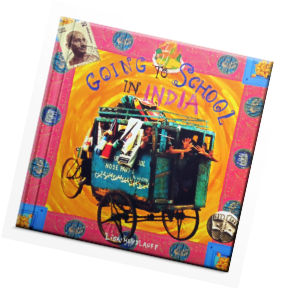
Going to School in India began with a children’s story.
23 years ago, Lisa, a teacher in London, came to India to answer Oliver, age 7’s, question: “What is it like to go to school in India?”
Lisa promised Oliver that if she ever went to India she’d find out.
Beginning with journey across India, Lisa, and Nitin, a photographer, travelled India for 18 months in search of what school can be. Listening to children and taking photos on film, the journey was not easy. What was perhaps most challenging was our collective inability to imagine that there could be a good story about ‘school’ in India. The story hadn’t been made yet, so none of us could see how a story could change the way children learn.

Entrepreneurial Step One. Make it. so everyone
sees what you mean.
Going to School in India is a 144 page children’s book, written by Lisa, photographed by Nitin and designed by B.M. Kamath, an incredible artist. Published by Penguin and Random House, it’s a celebration of what school can be in colour, texture and light. Going to School in India stories were incorporated into NCERT curricula, read by millions of children, made into a TV series that aired on national channels and our ‘theory of change’ that exceptionally well-designed stories can change the way children see their lives and opportunities, was out there, everywhere in the brightest pink you can imagine because you are reading this in black and white.
What was different now was that children (and everyone else) could see what we mean.
We discovered at speed that stories can go much further than any person, team, workshop, training. Like a good kind of wild fire, stories scale.
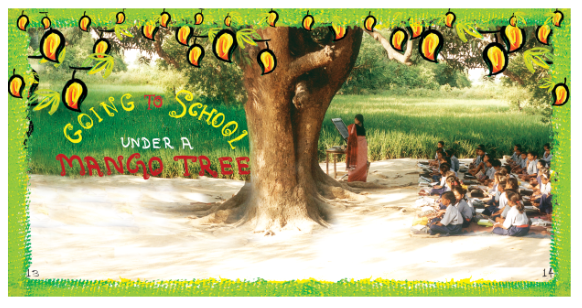
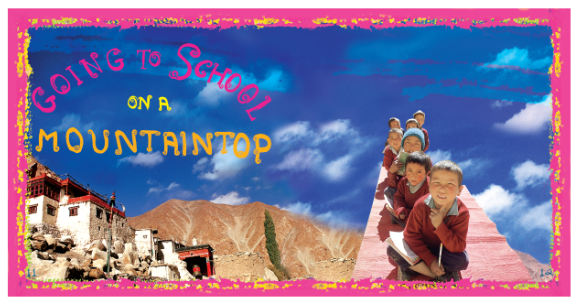
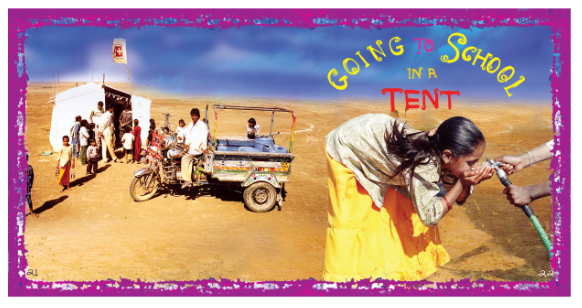
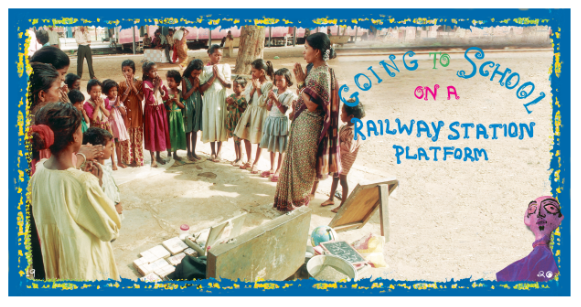
 Read the bookWatch the Tv series




Entrepreneurial Step Two. Word of mouth. The most powerful
kind of marketing.
Well-designed, exciting, questioning stories, drive empathy, enable insight, and importantly are read by young people themselves. Adults aren’t absolutely necessary :)
Reading stories, choosing between stories, is like when she elects to buy a snack from the street cart after school. She chooses between fresh juice, no plastic, packaged juice, tetra-pack. She makes a decision based on design, taste, cost, friends, closeness, proximity, right here.
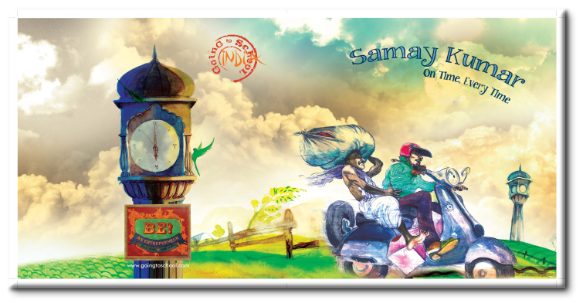





Entrepreneurial Step Three. Right place. right time.
Right here. right now.
We know the right place, the right time to reach young people is at school during school hours.
Urban city schools, rural schools, Going to School has MOU’s with state and city Governments to reach young people during school hours.
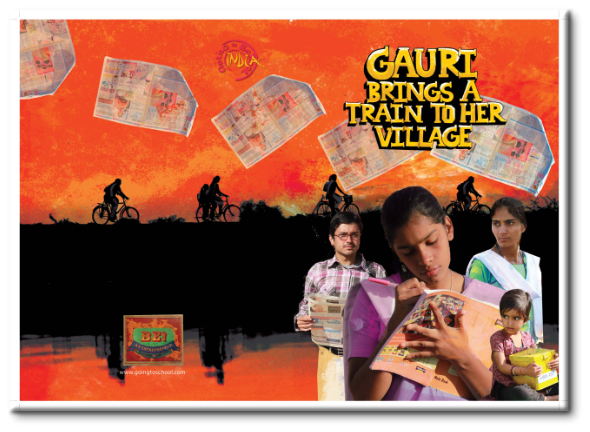
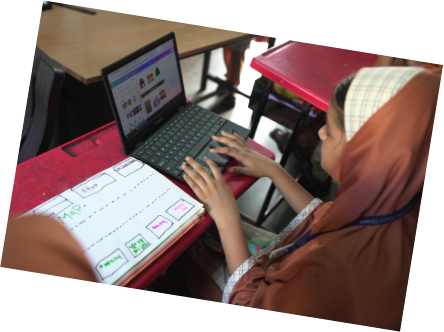
Going to School teams take printed stories, in local languages, to school to enable girls and boys in Grade 6-12 to read stories. We also bring games. Young people then complete their homework, outside in communities, offline. Day 2 of the same week we meet them back at school with technology, and with tech, young people apply their life skills, entrepreneurial skills to design-thinking solutions for Climate Change.
As an organization, Going to School makes design-driven stories, games, TV series, to equip young people with the entrepreneurial skills they need to stay in school and transition from school to sustainable enterprise of their choice, solving for the dual challenges of our time, youth unemployment and Climate Change.






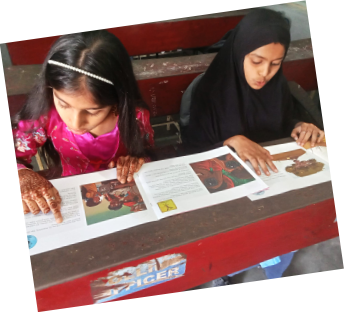
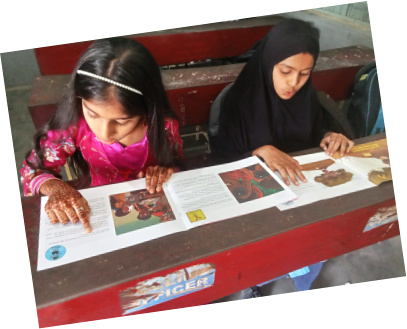


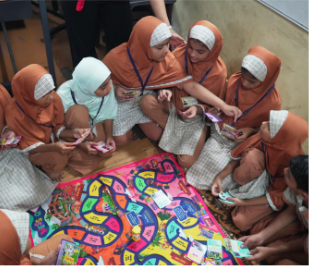
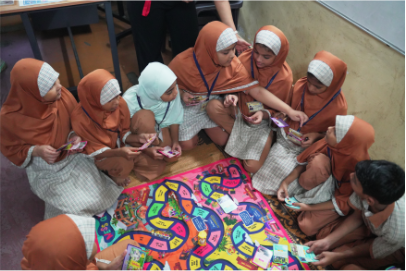


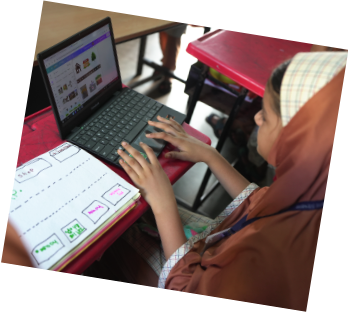













We have fierce focus on girls, we always have.
Going to School’s Outdoor School runs in urban Mumbai and Bangalore, peri-urban Goa, and rural Karnataka, Bihar and Jharkhand.
Girls and boys, learn life skills, entrepreneurial skills, financial literacy, through the skills adventures design solutions to Climate Change that cut across sectors, clean energy, food security, waste management, nutrition, plastic replacement. With a focus on the repair and circular economy joining the games, this made in India, for each location curricula is a direct match for girls, skills, education, livelihood and sustainable enterprises to solve for Climate Change.
New to our educational skills journey, helping us to teach girls life skills and a way in for us all, boys included, to see a change in boys as allies to girls at school, play and one day the world of work, we’re bringing football to girls (and boys) at school. It’s the first time in an educational skills program.
Then outside of school, in same school communities, Mum and Dad schools run to enable parents to learn the same skills their daughters and sons are learning, and support them to explore new entrepreneurial ventures.
And, the youth venture fund supports young people age 18+ to complete green business schools and start-up to solve for climate change.
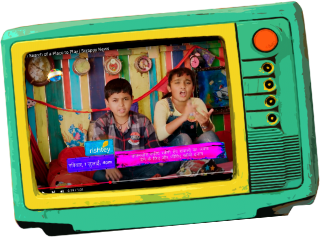
The Children’s Scrappy News Service, a news-talk-game-show edutainment series, run by children in a newsroom made of junk and once loved things, shares everyone’s stories on local and national television.
Stories with millions of sparkling outcomes, for children, going to school in India.