The power of stories
Going to School makes design-driven stories to equip young people in Government Schools with the sustainable enterprise skills they need to stay in school and transition from school to sustainable enterprise of her choice.


Girls

Education

Skills

Employability

Entrepreneurship

Climate Change
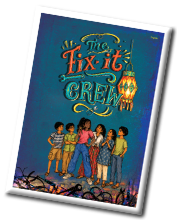
Led by design and focused on girls, Going to School stories are adventures in running a start-up that solves for climate change and faces all kinds of crazy challenges to make it work, just like the ups and downs any entrepreneur faces, the constant need to be positive, adaptive, inclusive, to start-up and succeed in India.

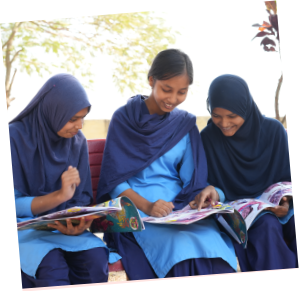
‘Choose your own adventure’ stories intrigue young people to want to read and find out more.

How we reach young people.
To make sure young people get a chance to read our stories, we go to school.
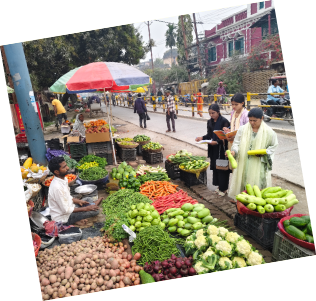
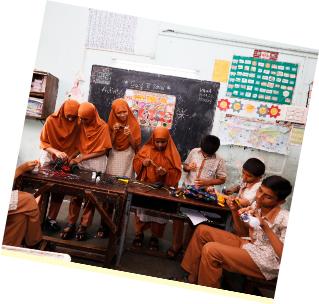
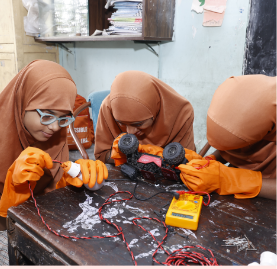
We have MOUs with state and city Governments that means we can deliver during school hours. And that changes everything. Day 1, Going to School teams bring stories to school to enable young people to read our adventures in their own languages. Games we’ve designed mean that young people play together to experience new life skills, business skills, applied maths (financial literacy). Games by definition are fun (can there be anything fun about Climate Change? Probably not) but new board games played in teams, build young people’s life skills to be able to play together, work together, to problem solve and design solutions for climate change, together. End of Day 1, young people go into their communities to do their own research. How far did the tomatoes travel to be here, for sale on a street-cart? If plastic is banned, why are vegetables being sold in plastic? All of this end of Day 1 research is outside and offline. Day 2, back at school, young people come with their research and we meet them with technology to enable them to build CAD models to design mechanical engineering solutions, from design to data to programming, young people use technology to design repair, fix-it solutions that are the foundations for businesses that solve for climate change.





Life Skills
Business Skills

Financial Literacy
Sustainable Entrepreneurial Skills

Climate Change

Tech Skills
How we reach girls in school.
The Outdoor School for Girls, runs in Government Schools, during school hours in Grade 6-12. Young people read stories and play games at school. After school, at home, young people complete action-research challenges in their communities. When they return to school we meet them there with technology that enables them to use their own experience, data, research, human-centered design skills to re-design products, enterprises, systems to create enterprises that solve for Climate Change.
The schools we work in are co-ed. The Outdoor School focuses on girls and equally engages boys. We’re measuring how boys become allies to girls at school, play, in their communities and in the future world of work.
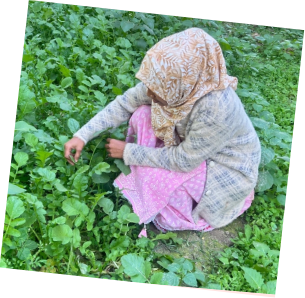
Stories are created specifically for each region we work in, with different emphasis according to the environment: urban or rural, Climate Change, repair, technology, clean energy, e-waste. For example, Mumbai focuses on the Repair Economy, Fix-it cafe skills, while Bihar’s Outdoor School focuses on rural sustainable enterprises that young people can start after Grade 12 that solve for Climate Change and create jobs in rural communities.
Stories show girls leading, boys supporting girls, joining their teams, young women starting businesses that solve problems for everyone, young men starting enterprises designing for women to be able to be a part of their work.






How we reach her family in school communities.
Mum and Dad Schools.
They say it takes a village to raise a child. That’s true, and, as our mega cities are series of integrated islands that have been stitched together, villages that have been merged, and because we can’t expect that young people will be able to navigate their communities perhaps as easily as they can their lives at school, we run Mum and Dad Schools.
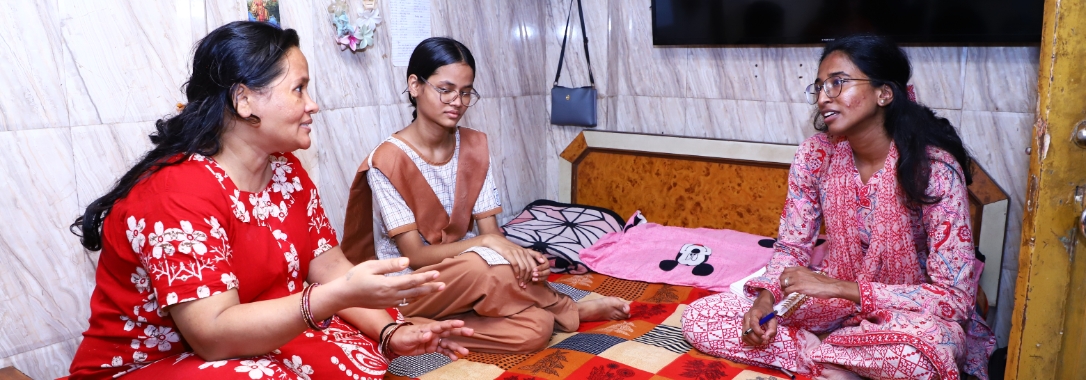
For girls, boys, who are in the Outdoor School program at school, we run gender needs assessments in school communities, listening to Mums and Dads about what they’d like to learn, do, play and what are their hopes for their children in our program in terms of life skills acquisition, retention and transition from school to work.
Mums in Bangalore told us they’d love to play football.
Mum and Dad schools are for communities of parents that would like to learn the life skills, entrepreneurial skills, financial literacy skills their children are learning in our program with the goal that they learn the skills they need to improve their livelihoods as well as support girls to explore new careers, enterprises and boys to become allies to girls in our integrated journey from school to play to communities to the world of work.

How we build a bridge from school to work.
From school to sustainable start-up of her choice. Climate Change Communities.
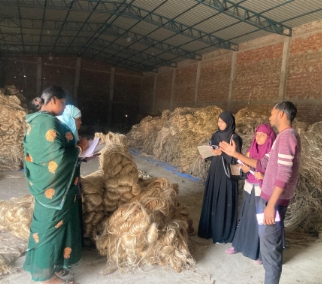
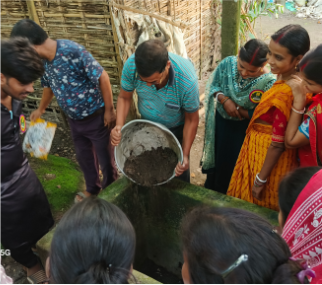
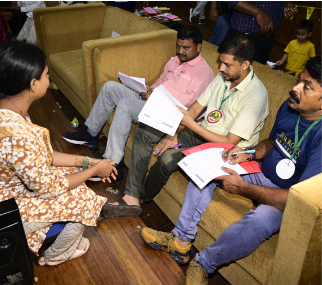
The Climate Enterprise Action Fund. Youth Venture Fund runs in school communities. Young people age 18+ who have completed Grade 12 and come from the Outdoor School, or haven’t completed our program or Grade 12, but are 18+ can enroll in our Green Business Schools to learn sustainable enterprise skills through experiential tours, meetings and internships with sustainable entrepreneurs who are are already running enterprises to solve for Climate Change.
Once they’ve completed one, two or as many business schools as they’d like and they have an idea they’d like to research. We work with them to research, design and pitch a business that solves for Climate Change and creates jobs.
When this all comes together is when we create proximity role models, young women and men entrepreneurs who in the same school communities as our young people are designing solutions, see their designs break ground and become a reality.
The Climate Enterprise Action Fund runs in Mumbai and Bangalore, supporting women to start-up in Urban India.
The Youth Venture Fund runs in Kishanganj, Bihar, supporting young people to go from the Outdoor School / Climate Change Education program in Grade 11 and 12 to start-up in Rural India, solve for Climate Change and create jobs.


How we get the word out.

The Children’s Scrappy News Service is a news-talk-game show edutainment series made across India and aired on local and national television channels. In a newsroom made of junk and once-loved things, children reporters get to the bottom of the big and small problems we face. Through games, interviews, challenges, explorations, the series is an epic, often silly, series of raucous *fun* adventures of getting to the bottom it an solving it for everyone, that has aired on nationwide channels.
In Bihar, we made 20 newsrooms in 20 school communities and made a series that was watched by 20 million children.
In Mumbai, we built a fantastic newsroom in the Worli Fishing Village, to make our nationwide series and filmed for 90 days.

Scrappy is made in India.
To be scrappy is to make something out of nothing to solve a problem.You don’t have to speak English or be online.

With all of the changes of everything, including media, education being created by AI, Scrappy is uniquely human and audacious.
Children make it, parents and communities see it. Everyone loves being a part of it. The making of scrappy news is as powerful as the airing. Once in Bihar, we had 10,000 people following the cycle rickshaw newsroom as it went through a village, to make the show.
Sesame Street. The Muppet Show. Thee Children’s Scrappy News Service has global grandparents.That said, Scrappy, made in India, is uniquely scrappy.
Celebrating children’s unique human-centered design potential to launch joyous movements that include everyone.
Made out of nothing. Made in India.

How we know the great game can bring it all together.
Girls’ Football.
Football for girls has been proven to teach her exponential life skills.
Football gives her the experience of skills that can keep her in school, skills that enable her to negotiate, communicate, work in teams, have a tolerance for ambiguity, make decisions, communicate, take action and importantly, overcome failure. You don’t stop playing because you lost a match.
80% of women in C-Suite jobs played team sports at school.
The UK invested 600 million pounds in grassroots football for girls 20 years ago and today has a globally winning women’s team and has unleashed a new women led sports economy invested in by women venture capitalists.
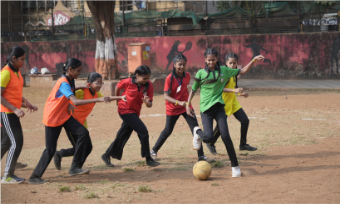
The Outdoor School has permission to bring football to school for girls, in all of our schools. To select a school for girls football, we run a gender audit with girls, boys, teachers, principals, and parents and if it’s all go, then we bring football to school for girls and boys. And even to Mum and Dad schools if that’s what they’d like to play.
We have a gender inclusive football, skills curricula that coaches, 60% of whom are women, are trained to deliver.
We measure and report on the life skills girls learn through football. The change of boys as becoming allies to girls in school and play.